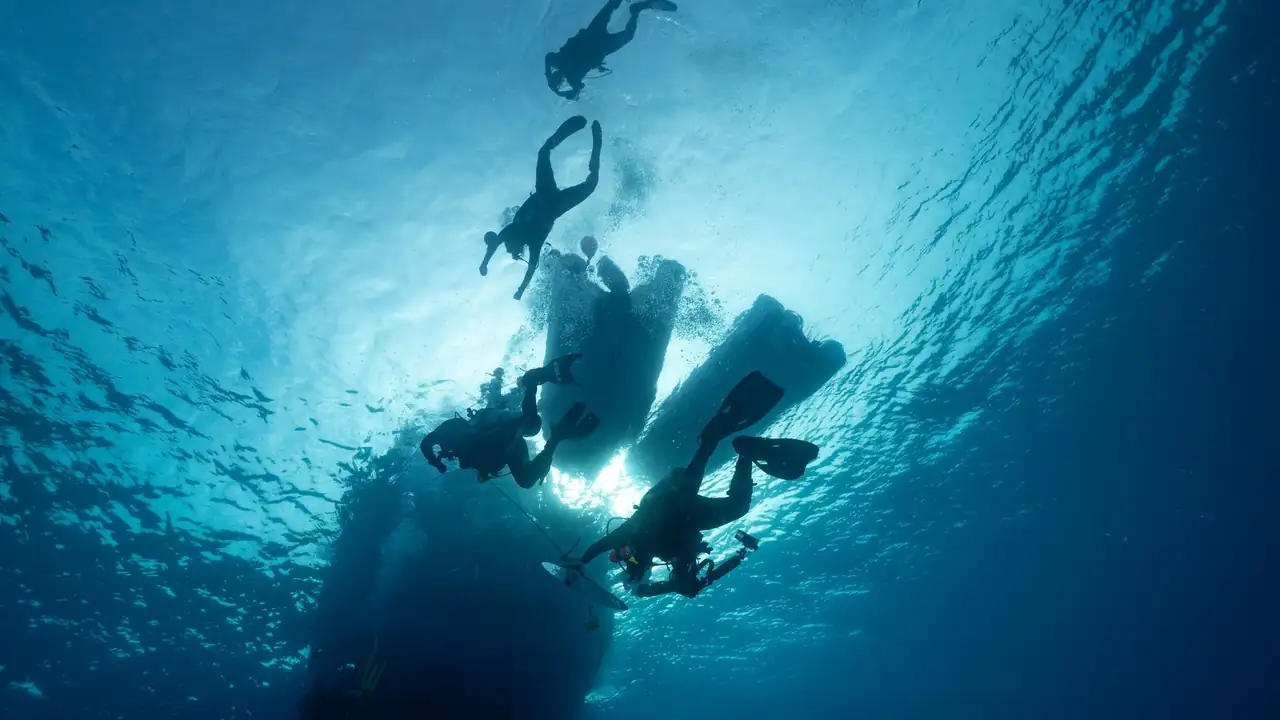
Cairns is one of the few places on earth where diving is a genuine local industry rather than a holiday activity. The reef fleet running out of the Marlin Marina takes thousands of visitors to the Great Barrier Reef every week, and every one of those boats needs crew. Some of those jobs need dive qualifications. The surprising part is how many do not, and how often the pathway in starts with a coffee machine rather than a regulator.
The jobs on a reef boat
A day boat or liveaboard runs on more roles than divers:
- Deckhand. Lines, anchors, cleaning, gear handling, safety watch. No dive ticket required to start, and this is the classic entry role.
- Hostie or hospitality crew. Food service, bar, cabins on liveaboards. Straight hospitality skills, at sea. An RSA helps on licensed vessels.
- Dive crew and divemasters. Guiding certified divers, supervising introductory experiences, filling tanks, managing gear.
- Instructors. Teaching courses, from resort-style intros through to certifications.
- Skippers and engineers. The marine side, with its own ticket ladder covered in the coxswain and marine tickets guide.
- Photographers and videographers. Real jobs on bigger boats, usually earned after you are already crew.

Hospitality gets you aboard faster than a dive card
Here is the pattern locals know: the fleet is permanently short of people who can make coffee, serve food, keep a deck tidy and stay cheerful in swell. A certified diver with no work ethic is less employable than a hard-working hostie with none. Many of the working divemasters in Cairns started as deckhands or hospitality crew, proved themselves for a season, and did their dive training while employed, sometimes with help from their operator.
So if your dive resume is thin, do not wait until it is thick. Apply for deckhand and hostie work now, be brilliant at it, and climb from inside.
The professional dive ladder
The recreational dive industry runs on certification agencies, with PADI and SSI both strongly represented in Cairns, and the professional ladder looks like this:
- Open water and advanced certifications. Recreational levels, done by millions of holidaymakers.
- Rescue diver and first aid. The prerequisite step that starts separating professionals from tourists.
- Divemaster. The first professional rating. Divemasters guide certified divers and assist on courses, and this is the standard working qualification on Cairns day boats.
- Instructor. Teaching qualifications earned through an instructor development course and exam. Instructors run courses, and in a training town like Cairns they are always in demand in season.
All of it can be trained in Cairns, and the city is one of the cheapest and busiest places in the world to do it. Choose a training operator the way you would choose any course provider: ask what is included, how much boat time you get, and what help they give graduates finding work. Be wary of anyone selling a guaranteed job.
Two practical requirements to know about early. Professional-level dive training requires a dive medical from a doctor, so if you have asthma, ear trouble or other relevant history, get the medical conversation done before you pay for a course. And diving as work is regulated in Queensland, with Workplace Health and Safety Queensland the regulator, so expect employers to be strict about medicals, logs and procedures. That strictness is a feature of a good operator, not a flaw.
Day boats or liveaboards
The two halves of the fleet run different lives. Day boats leave the marina early, dive the outer reef, and have you home for dinner, which suits anyone living a normal Cairns life on shore. Liveaboards stay out for multiple nights with crew living aboard on rotation, which means longer stretches of work, meals and accommodation while at sea, and no rent burning a hole in your pocket during a swing. Liveaboard work is more intense and more immersive, and it is where a lot of dive professionals rack up their numbers fast. Try a season of each before deciding which suits you; plenty of crew move between them.
The seasonal shape of the work
The fleet breathes with the tourist calendar. From roughly June to October the boats run full and operators hire hard, with the ramp-up starting in autumn. Through the wet season, from November to April, passenger numbers drop, some boats reduce schedules or slip for maintenance, and casual crew hours thin out. Liveaboards smooth the curve a little, and the dive training market runs year-round, but plan your finances around a quiet summer. The crossover with tourism and reef work generally applies here: multi-skilled crew who can work a bar, a deck and a dive platform get the hours that exist.
Working holiday makers
The dive industry is one of the most backpacker-friendly employers in Cairns, used to 417 and 462 visas and to crew who stay for a season. Sort your tax file number, bank account and RSA in your first week, per the working holiday guide, and be straight with operators about how long you are staying. Crew who commit to a full season get the better boats and the better rosters.
Reef operators post crew, hospitality and dive roles alongside everything else on the live job board, and the backpacker listings are worth a daily look in the hiring months. Walk the marina with a one-page resume as well. The fleet still hires face to face, and being there at the right time has launched a lot of Cairns dive careers.